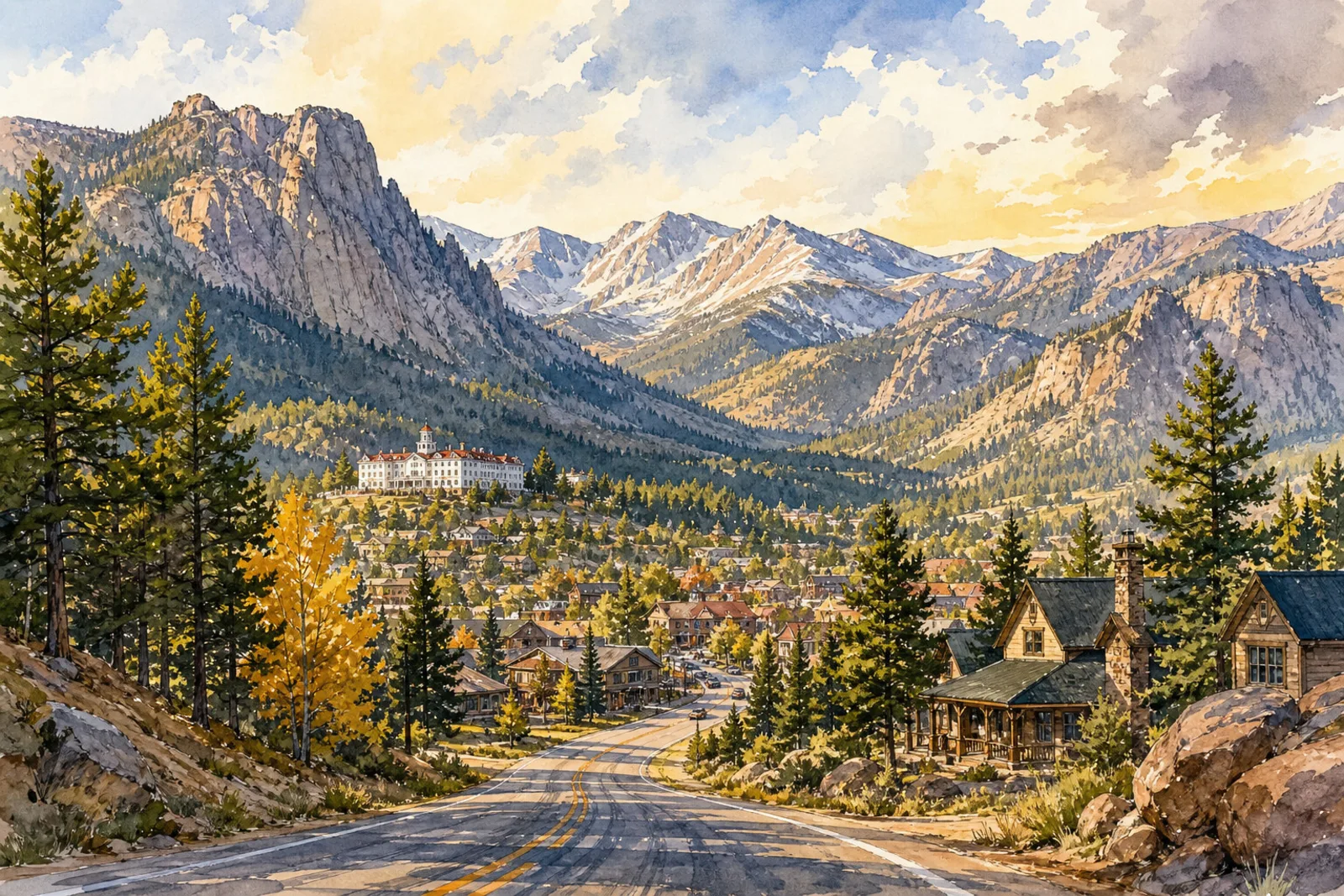
Getting to Estes Park

Estes Park is easy enough from Denver, but the trip gets easier when you make the airport, drive, and seasonal-road decisions before you are already tired.

Arrival map

Denver sets up the Estes Park arrival.

This map shows the main arrival choices before the rest of the trip gets locked in. Denver is the primary approach to compare first. Boulder is the helpful backup or add-on choice. The lines are planning corridors, not turn-by-turn road geometry, so use live directions before you drive.

  • Tap a marker to see how each town fits the drive.
  • Solid line is the main approach; dashed lines are alternate regional approaches.
Open driving directions →

Denver International is the default answer

For most travelers, DEN is the well-paced choice because the flight options are far better and the drive to Estes Park is manageable. Once you leave the airport, the main question becomes how much canyon driving and altitude you want on day one.

Season changes the driving math

Summer mostly means traffic and timed-entry logistics. Shoulder seasons and winter add weather, road conditions, and the possibility that your ideal scenic route is not the one the day will actually allow.

Arrival basics

  • Fly into Denver unless you have a very specific reason not to.
  • Give the first day less ambition if you are landing late, driving in weather, or adjusting to altitude.
  • Check Rocky Mountain National Park timed-entry and road status before you build the rest of the itinerary around assumptions.
  • If Trail Ridge Road matters to your trip, verify seasonal status instead of treating it like a guaranteed scenic drive.
  • Staying downtown usually makes the first and last day easier than pushing too far out for a supposedly better nature feel.